Home / Articles / How to choose a fire suppression system for your facility
How to choose a fire suppression system for your facility
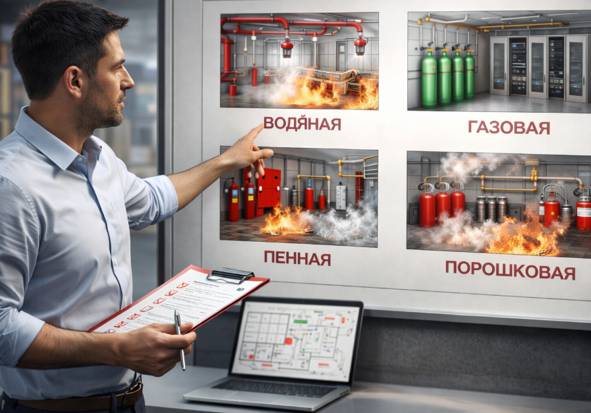
Choosing a fire suppression system for a facility is a critical task that directly impacts the safety of people, the security of property, and compliance with legal requirements. There are no one-size-fits-all solutions: each system is selected individually, taking into account the building’s intended use, the characteristics of the premises, and the level of fire load.
The first step in choosing a system is analyzing the fire hazard category. For warehouses with large volumes of flammable materials, water or foam systems are more often used, as they effectively contain the spread of fire over large areas. For server rooms, archives, laboratories, and electrical control rooms, where the use of water is unacceptable, gas systems are the optimal option. Dry powder systems are used in technical rooms, facilities with live equipment, and areas with a high risk of rapid fire.
The next factor is the building’s design features. Ceiling height, the presence of partitions, complex layouts, and the presence of suspended ceilings or raised floors directly impact the type of alarms, sprinklers, and extinguishing agent distribution system used. For large warehouse complexes, the presence of racking systems, automated lines, and restricted access areas is also considered.
Climate conditions and utility systems are equally important. In unheated spaces, water systems require the use of dry piping or antifreeze. If the facility is equipped with powerful ventilation, this also impacts the calculations, as airflow can reduce extinguishing effectiveness and spread combustion products.
Special attention should be paid to regulatory requirements. The design and installation of fire extinguishing systems are governed by the Technical Regulations on Fire Safety Requirements, codes of practice, and GOST standards. A properly selected system must not only meet actual operating conditions but also successfully pass inspections by regulatory authorities. Therefore, selecting equipment without specialist assistance often leads to errors, rework, and additional costs.
Economic factors also play a role, but relying solely on cost is unacceptable. A cheap system may prove ineffective, difficult to maintain, or non-compliant. It’s important to evaluate the total costs: design, installation, maintenance, repairs, and potential downtime in the event of equipment failure.
The best solution is to contact a professional company that will survey the facility, prepare a technical solution, and propose the optimal type of fire suppression system. This approach allows you to consider all risks, ensure compliance with legal requirements, and achieve reliable protection for your specific facility. Choosing the right system is not a formality, but a real tool for preventing the catastrophic consequences of a fire.
08.01.2026
350 👁